
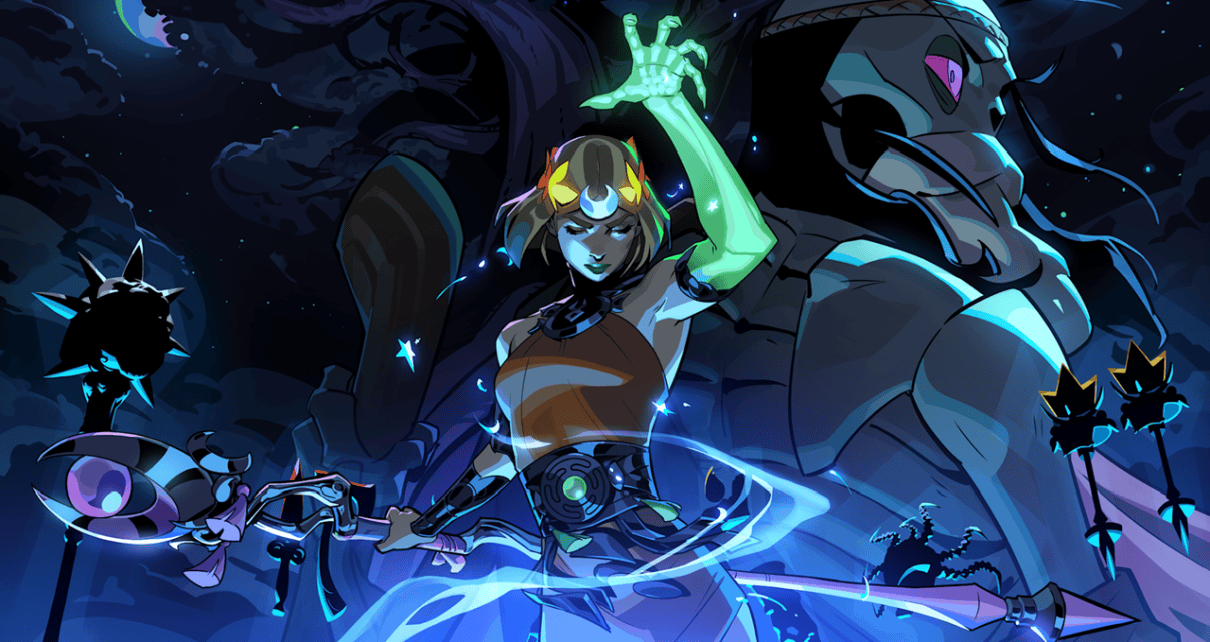

For over a decade, Judy Alice Lee has been a titan in the voice acting industry as she voices roles in franchises ranging from CALL OF DUTY: Black Ops to Ghost of Tsushima/Yōtei and Hades. At Dragon Con 2026, I was lucky enough to get to interview Judy Alice Lee in a one-on-one interview. During our time together, we talked about her voice acting and recording engineering careers, her history with taekwondo, both voicing and singing as Melinoë, and more!
You can check out Judy Alice Lee at her official website, on X, on Facebook and on Instagram, on YouTube and SoundCloud, and on IMDb.
You can also check out Dragon Con on the official website, on Facebook, on X, on Instagram, on Bluesky, on Pinterest, and on Discord.
This interview has been edited for content and clarity.
OR: My name is Quentin H. with oprainfall, and could you please introduce yourself?
Judy Alice Lee: Hi! My name is Judy Alice Lee; I’m a voice actor and recording engineer. I’ve been working in video games, animation, dubbing, audio books for over 10 years now.
OR: You voiced Fune in the Ghost of Tsushima expansion, and then later returned to the series to bring Yone to life in Ghost of Yōtei. But just as importantly, you were the recording engineer for Ghost of Tsushima before you were cast. What was it like shifting from recording engineer to being in the voice cast? Did you have a hand at all in shaping how Kurosawa Mode turned out with adding the audio compression to match up with that old movie style?
JAL: I had nothing to do with that! A dev team had everything to do with the sound design, the processing, post-processing, [and] all of that. I did have so much fun recording audio on the motion-capture stages for all the performance capture that was done for Ghost of Tsushima, so that was amazing. And so, getting to transition over to being in the suit, being in the helmet cam, was really incredible and really surreal.
And that was the first — I want to say the first — project that I really got to sink my teeth into. Scene work, in total, in the volume, in the performance capture stage. So that was really cool — I got to know the cast, I got to know the crew, while I was engineering, while I was working sound. And I made a lot of friends doing that project! So, it was really, really fun. It’s a near and dear project of mine.
“But for accents that I want to make sure that I honor the original language in…
[…]
I work with an accent coach — I like to make sure that I’m doing the right thing for accent work.”
OR: You’ve worked on the Call of Duty franchise since Call of Duty: Black Ops 4 as Specialist Seraph, and you’ve voiced various roles in nine games so far in total. How does it feel to continually return to the series over and over again throughout your career in different roles? Do you have any favorite memories attached to the series?
JAL: Absolutely. I love the Call of Duty franchise — I have a lot of friends at various studios that work on those games. I engineered and was a recording engineer for a few of those titles before I transitioned into acting in them. Make friends with the people you work with! It would be my advice, you know what I mean? Be good to work with, and do good work. That’s my mantra. Your question…Oh, favorite memories, that’s right. Let’s see…
Yes, I absolutely have one!
For Operator Seraph, which was my big role that launched my voiceover career into existence, really, the session that we were recording ‘efforts and exertions’ for, is one of my favorite stories to tell. When we’re doing [Death] by Fire, it was one of the first times in my life that I’d got to scream at full volume. And I don’t know if you remember the last time you’ve screamed at full volume as loud as you could for as long as you could, you know what I mean? But it was so cathartic for me, because my entire life, I’d been holding back, and so it was an expulsion of a lot of pent-up repressed energy in my life. So it was really important and cathartic for me.

OR: You said something interesting during your August 10, 2026, interview on The Game Maker’s Notebook as almost an offhand comment. You were talking about how when you’re recording for a role, you’re often entering a zoom session and seeing a script you’ve never seen before. You then said: “I happen to love cold reading, I happen to be comfortable with it and very familiar with that flow.”
What makes you love cold reading? Do you prefer that instead of having the script ahead of time?
JAL: Depends on the format. Depends on the game. Depends on what kind of character I’m playing. Depends on how much emotion is required for the scene. For video games, a lot of the time, you’ll see batch lines, so groupings, of you know, five or six scene-say lines. Like, five or six marking equipment-on-the-floor lines. Buckets of lines. And those are fun to rattle off and create variations for so that you don’t get into the same rhythm, the same cadence for every line. But for scene work, for back-and-forth emotion-dense conversation? Those ahead of time will help me prepare emotionally, to be in the right emotional space for that kind of work. And also, accent work — having a script ahead of time is huge to make sure that I can brush up on the exacting nature of accent work and…what else?
Yeah, these are some really great questions! You really dug into the things I’ve put up on the interwebs! It’s really impressive! But yeah, I love getting scripts ahead of time, but also I’m super game for cold reading, sight reading, and stuff like that.
OR: You posted a great clip on Instagram a few weeks ago of you [performing] various accents. Is it hard doing various accents while you’re cold reading?
JAL: Yeah! Accent work, definitely, it’s a study. To do it on the fly, you can — some people opt for certain accents, like the RP accent — I’ve spent hundreds and hundreds of hours in it, so I feel very comfortable, very, very loose, very nimble. [OR Note: She is referring to the ‘Received Pronunciation’ accent, which is perceived as the ‘standard’ British accent.]
But for accents that I want to make sure that I honor the original language in, and that I’m still working through and that I haven’t spent hundreds-and-hundreds of hours — 12,000 lines — for you know, in Hades II. If I haven’t spent that time living in it, then absolutely. I work with an accent coach. I like to make sure that I’m doing the right thing for accent work. I like doing things on the fly, but accent work is not one of them.
“I really do think that my exertions sounds are rooted in taekwondo, are rooted in my martial arts background.
And I’m so grateful because I am in control of how I want my characters to sound, how they move ki around their body, and stuff.”
OR: Several roles in Hades II are split between actors and actresses. For example: Artemis in Hades II has two voices: Jamie Landrum is the speaking voice actress and Ashley Barrett is the singing voice actress for the role. Yet, for Melinoë, you perform both her speaking and singing voice. What was it like having to find and maintain Melinoë’s voice across both dialogue and music?
JAL: That’s a great question! I love that project so much, I love my character in that game so much. I would say that it was challenging, because Melinoë’s voice is breathy and airy and a little bit in a very specific register. And emotively, she’s very restrained, constricted — things that when you’re singing, can be challenging to not be out of character in.
Especially with so much stillness and restraint, and deadly energy to bring that to a lilting melody and maintain that was challenging, but really fun work. And, Darren Korb, the audio director for Supergiant [Games], kept me honest in all regards. He was Zagreus in Hades I, so he’s my spiritual sibling in both project and in real life! We became really good friends. But, he was there directing every voice session, he was there directing the music, so we were able to keep things consistent throughout in that way, as well.
OR: In June, you performed music from the Hades franchise as part of the Ballads of the Underworld Concert in London, and I know it was at least the second time you’ve performed live since I previously saw you sing at GDC this year. What is it like performing live for an audience versus in your home studio for yourself?
JAL: It’s great! You know, it’s amazing. I’ve been performing acoustically — and I’m not religious anymore, but I grew up performing for the church for my whole life — and then, sort of doing solo shows and things like that in college and post-college. But, to sing at this caliber, in London, to travel internationally for it and sing at the Royal Festival Hall with the Mozart Symphony Players? That’s — I’ve never — that’s a bucket-list kind of thing for me. So hugely different, hugely an honor. I’m just thrilled to be a part of it!
OR: I keep seeing online that you are a second-degree black belt in Taekwando. When did you start in martial arts, and what role does it play in your life now?
JAL: Oooooh that’s a really great question, too! I grew up doing Taekwando, and I did it all throughout college. I competed for the UCLA team, it was really fun, important part of not-repressing my angry energy growing up from a tumultuous household. So, it was very important. It was a place where I belonged. Good mentorship, good friendships, came out of that.
And in terms of how it informs my vocal performances…That’s where I learned the power of exertions and the flow of air through the body when fighting, when sparring. And so, I really do think that my exertions sounds are rooted in Taekwondo, are rooted in my martial arts background. And I’m so grateful because I am in control of how I want my characters to sound, how they move ki around their body, and stuff.
And so I feel like it helps me attune to the types of characters and the types of pain sounds, the types of death noises and death rattles that I record. So, yeah! It’s all feeds into it — a huge feedback loop.

OR: Speaking of vibing — you voiced a character in MARVEL Tokōn: Fighting Souls. Can you talk a little bit about that?
JAL: I did! That was super fun. I voiced Danger in MARVEL Tokōn: Fighting Souls. And, that was a really fun adaptation of Danger, because it is a younger, rebooted, reset, kind of version of Danger. So, we’ve seen Danger Room in the X-Men franchise, this version of Danger is curious, innocent, you know? We sprinkled in a lot of new interactions with the world, but keeping things feeling ‘computed,’ keeping things feeling ‘generated in a way that doesn’t feel like modern AI.’ So, you know, that was like an interesting balance to strike, too.
But that was a really fun one, that was great! *laughs*
“But just because you would be great at something doesn’t mean that that is what would fulfill you and that’s what you should be doing.”
OR: What was your first reaction when you realized that you booked Melinoë?
JAL: *pauses* Wow. I was blown away. I was in disbelief. Huge fan of Hades I. A big, huge fan of Hades I. I recognized what project [it] was going to be, that I was submitting for. Sorry, that was a very jumbled sentence, but you know what I mean!
But having recognized the IP that this was for, I couldn’t believe it. Yeah, I was blown away! *laughs*
OR: Is this your first Dragon Con? What do you think of this year’s 40th convention?
JAL: It’s incredible! The convention’s been going on for 40 years that’s a deep, lore-ridden, enterprise. It’s really impressive. And this is my first one, so I’ve never been. I’ve spent very little time on the east side of the country, on the East Coast, so — does this technically count as East Coast?
OR: I think so?
JAL: So, to travel for this — had never really been a possibility for me. I wasn’t aware that it had been this huge adventure! But the fact that 78,000 people are congregated for this is insane! *laughs* And it sounds like its only grown over the years. And I think that anything that continues to expand is doing something right, and that’s really respectful.

OR: To close this out — any regrets about not going to dental school?
JAL: *laughs* I think I would have been a great dentist!
But just because you would be great at something doesn’t mean that that is what would fulfill you and that’s what you should be doing.
OR: Thank you very much, I appreciate it!
JAL: Thank you!
What is your favorite role of Judy Alice Lee’s so far?
Did you see her perform as Melinoë from Hades II in London earlier this year?
Let us know in the comments below!


