

 |
|
|---|---|
| Title | Cooking with Wild Game Volume 3 |
| Author | EDA |
| Illustrator | Kochimo |
| Publisher | JP: Hobby Japan EN: J-Novel Club |
| Original Release Dates | JP: June 24, 2015 EN: June 30, 2019 |
| Genre | Cooking, Slice-of-life, Rustic |
Author’s Note: I discuss details of storylines and characters which could be considered minor spoilers. No major spoilers will be revealed.
Cooking with Wild Game Volume 3 continues the story of Japanese-born, seventeen year old Asuta Tsurumi, who has been whisked away to another world and has begun to adapt to life as part of the primitive Morga Forest’s edge community. Since his arrival, Asuta has been using his knowledge and skills as a trainee chef to try to improve the lives of his new people. Ai Fa, the hunter who found and welcomed Asuta into her Fa clan, supports his efforts to convince their community that delicious food can bring new joy and strength to their lives. The previous volumes saw Asuta help Ai Fa’s friends, Rimee Ruu and elder Jiba Ruu, and saw him requesting another chance to convince the more skeptical Ruu head, Donda Ruu. Donda Ruu instead challenges Asuta to prepare a pre-wedding meal for members of their affiliate Rutim clan, and after such a resoundingly positive impression, the Rutim head and father of the groom, Dan Rutim, requests Asuta to prepare the banquet for the wedding itself.
Volume 3 begins with Asuta contemplating such a significant request, though when first asked, he refuses. As Asuta was overwhelmed, Ai Fa says that such a request would be improper, given the lack of bonds between the Fa and Rutim clans. So for a change of pace, Ai Fa takes Asuta for his first visit into the neighboring post town, where he is again starkly reminded of his new predicament and surroundings. He also learns that the reputation of the people of the forest’s edge is one founded on fear, bitterness, and misunderstanding. Later, an encounter with a member of the wicked Suun clan sours things, though an aloof bodyguard for the nobility named Kamyua Yoshu helps to resolve the conflict. Asuta and Ai Fa can only wonder why such a mysterious, yet somewhat easygoing, individual would want to interact with members of the forest’s edge.
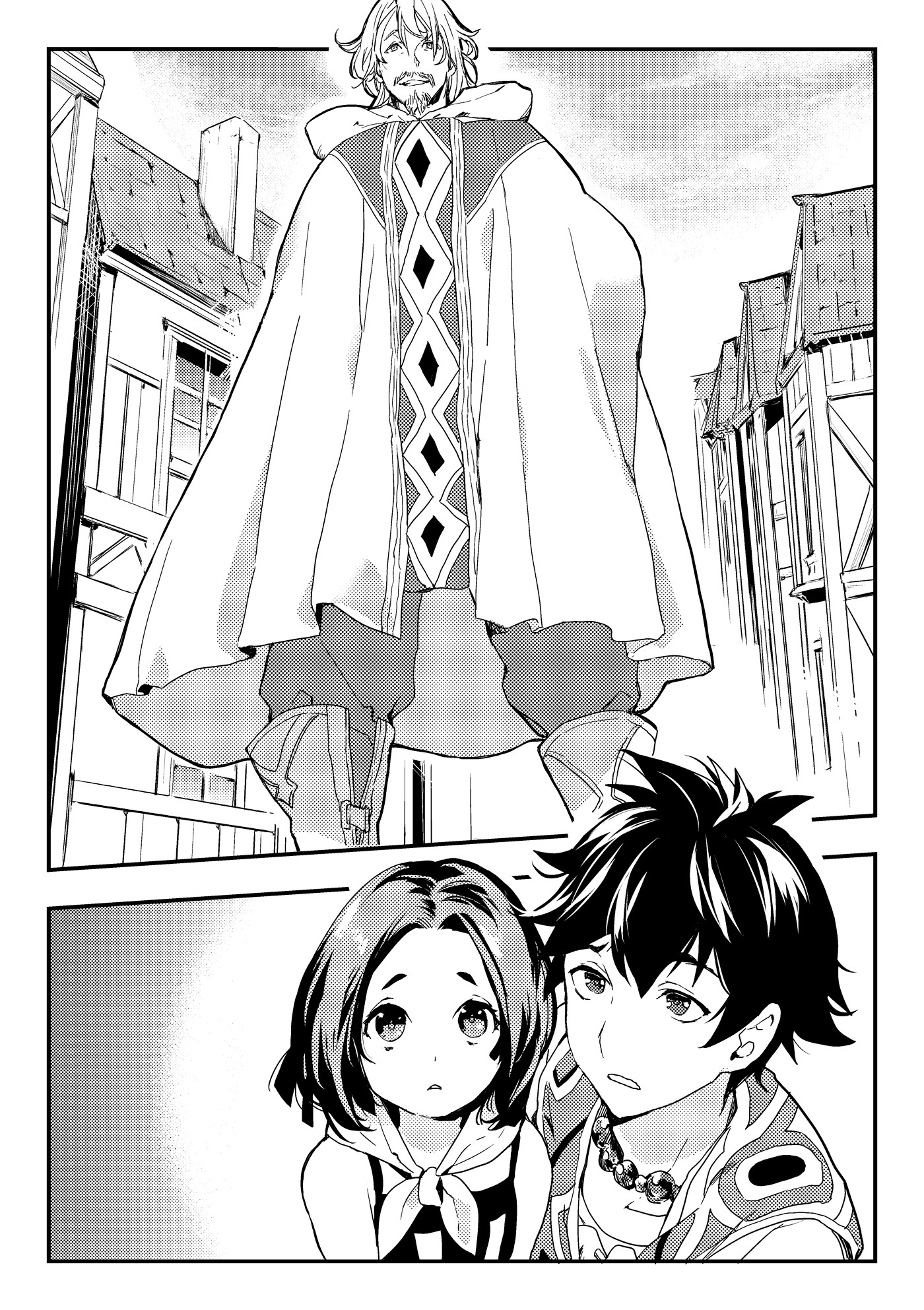
A bit out of sorts by the visit into town, Asuta is further thrown for a loop when they are visited at home by the betrothed couple from last night’s dinner party: the first son of the Rutim, Gazraan Rutim, and his partner, Ama Min. Rather than request a favor, they offer to hire Asuta as a chef and compensate him properly. This causes another wave of uncertainty within Asuta, as more personal feelings regarding his identity and his place in this new world shake him.
With introspection and with Ai Fa’s council, he ultimately chooses to take on the enormous task, only to be met with a myriad of challenges during the five days leading up to the wedding night. Asuta will have to interact with fierce hunters, as well as come up with a new dish to satisfy the most stubborn of guests. He’ll also need to teach the Ruu women his cooking techniques for them to help cater for one hundred guests. A surprise visit from that aloof Kamyua Yoshu only adds to the bustle, and then there’s the frenzy of the wedding day itself. While making sure the wedding is an unforgettable night for all, Asuta will have to navigate his, Ai Fa’s, and others’ personal feelings as they further come to light.
Cooking with Wild Game Volume 3 is jam packed, offering a robust story, full of perspective, detail, and rich emotions, framed around the excitement and energy of the wedding banquet. We are offered another chapter in the lifestyle theme of tradition versus the new ideas and techniques Asuta brings, with the history, depth, and spates of emotions we come to expect from these clashes. This time, it’s in the form of the marrying couple wanting to share the deliciousness of Asuta’s cooking, as well as a request for Asuta to create a dish that combines old ways with his new flavors so as to satisfy those guests wanting a traditional, familiar experience.
The story also offers a significant piece of world building via the post town visit, as we glimpse the clamor of travelers, shopkeepers, and traders through Asuta’s eyes. We see slice-of-life moments like Ai Fa trading giba tusks and horns for money, the two buying vegetables, and Asuta trying local cuisine in the form of a stall snack. Tangible tension during the trip is felt when the townsfolk’s unfavorable feelings regarding the people of forest’s edge are introduced and discussed.
More tension comes from two encounters with members of the despised Suun clan, one of which occurs right in town. Ai Fa and Asuta are pulled into a heated situation that reinforces the stereotype against their community. This and a second incident with the Suun also furthers the conflict that has been brewing since the first volume. They serve as reminders that life at the forest’s edge is a harsh, challenging one, even during the happiest of times, yet can lend themselves to exemplify acts of courage and virtue.
To contrast those heavier moments, there’s plenty of humor and lightheartedness throughout the five days spent between Asuta and his Ruu assistants, and, of course, the uplifting feelings via the flurry and charm of the wedding itself. And perhaps what I’m most impressed by is the seamlessness between story and the continued development of so many characters, from the growingly familiar Reina, Vina, and Donda Ruu, to the newer Gazraan Rutim, his father Dan, and the nonchalant Kamyua Yoshu. An immersive and full story, I had fun experiencing this vivid snapshot where family and friends come together in celebration.
Along with its fervorous, detailed story, this volume is praiseworthy for its character development, and what most impresses me is the authenticity of emotions felt by these characters. Palpable emotions are being conveyed all throughout and the character depth they bring is exceptional. Beginning with Asuta, he goes through quite the gamut of emotions and headspaces this volume, starting with the anxiety of being asked to lead a wedding dinner. He’s overwhelmed, both by the request, but also by his incomprehension as to why he’s hesitating. It takes him real introspection to find and understand the mental hurdle. Similarly, I can feel how deeply rattled Asuta becomes when he first enters the post town. He explains to Ai Fa, and us readers, how this lively scene is too similar to how a town would be like in his past life. The similarity mixed with the profound differences, defined by their antiquated aesthetics, confuses and off-balances him, and his sheer discomfort in this moment feels genuine. Fortunately for Asuta, as he overcomes these issues, he experiences notable joy when seeing that his efforts are bearing fruit. The appreciation, the spreading delight and excitement shared with everyone, and the willingness of others opening up to him allows Asuta to show his best traits.
As for elements of Asuta’s character I’ve past criticized, I’m happy to see that some of them have been toned down. He continues to be self-deprecating as a means of humor or to ease tension. If not overdone, it can actually be funny. He also has scenes where he behaves weak and foolish, and again, it’s toned down to where it’s nearly humorous. I’m still skeptical, though, as I can’t forget the previous damage done, but I also remain hopeful given how the humor comes through this volume.
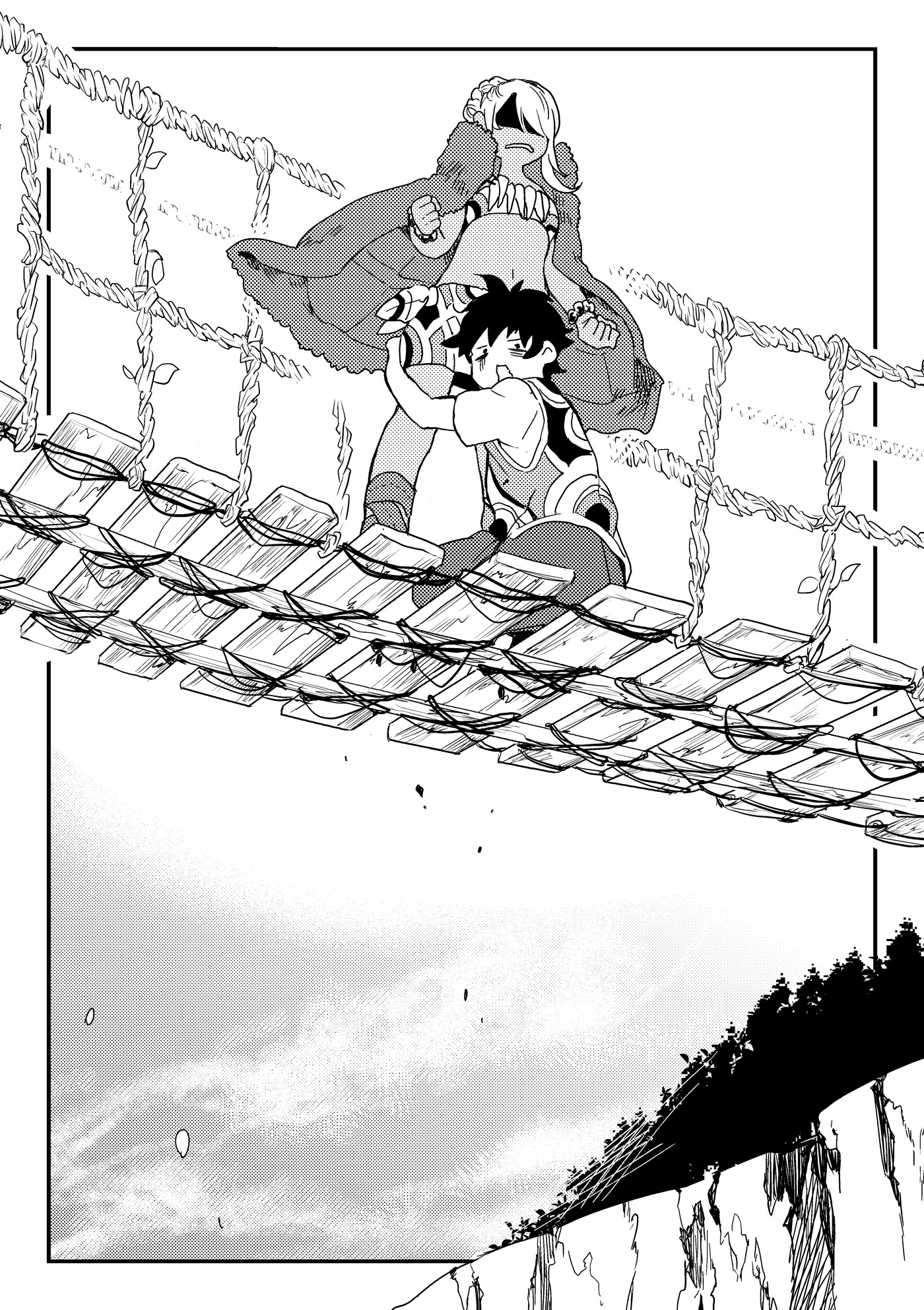
Ai Fa also has her moments to shine, acting as a voice of reason and sounding board for Asuta as he works through his hesitations and fears. She can be a bit blunt, but she takes Asuta’s concerns seriously, asking the right questions for him to discover what’s holding him back. And when he decides to take the job, we see her caring side on display during the preparations on the wedding day. She has clearly been observing Asuta cook until now, so for her to seamlessly assist him demonstrates her mindfulness towards him. We also see her pride and strength as a hunter and person of the forest’s edge during the two clashes involving the Suun. With the first incident, Ai Fa boldly subdues a drunk, scuffling Doddo Suun and neutralizing any danger towards the townsfolk. The second incident has her valiantly standing up against them alongside Asuta. I believe this is Ai Fa at her best; her natural leadership, courage, pride as a person of the forest’s edge, as well as her fierceness, are on full display, and are wonderfully contrasted by her genuine care and concern for Asuta.
Not all is praiseworthy regarding Ai Fa, however, as some of her traits and actions still do more harm than good. In previous volumes too, some of Ai Fa’s personality traits are used to play off of Asuta’s for humor’s sake, but they tend to have an abusive tinge to them. Ai Fa doesn’t hesitate to insult Asuta, calling him a fool or stating he’s weaker than a child. She also continues to use physicality to express herself by kicking or hitting Asuta. More times than not, it’s neither funny nor cute. Like with Asuta, I’m glad to see a lot of this toned down in Volume 3 and I hope the down trend continues.
A quick note, in similar vein, insults and such seem to be prominent amongst the Ruu siblings too, and although readers could call it sibling banter, some of it goes way too far. Rimee Ruu is often called a runt given her age and small stature, and Ludo Ruu is likewise targeted for his height and build. What really bothers me though is when Lala Ruu is called a “man-woman” multiple times. She has an energetic, somewhat aggressive nature, and she’s only twelve. Even if this is between siblings, calling her this is outright disgusting. Even the eight-year-old Rimee Ruu uses the term as retaliation. It’s certainly a misstep given how well these types of interactions are toned down overall.
More on the characters and some final thoughts on this volume on page 2 ->


