

 |
|
|---|---|
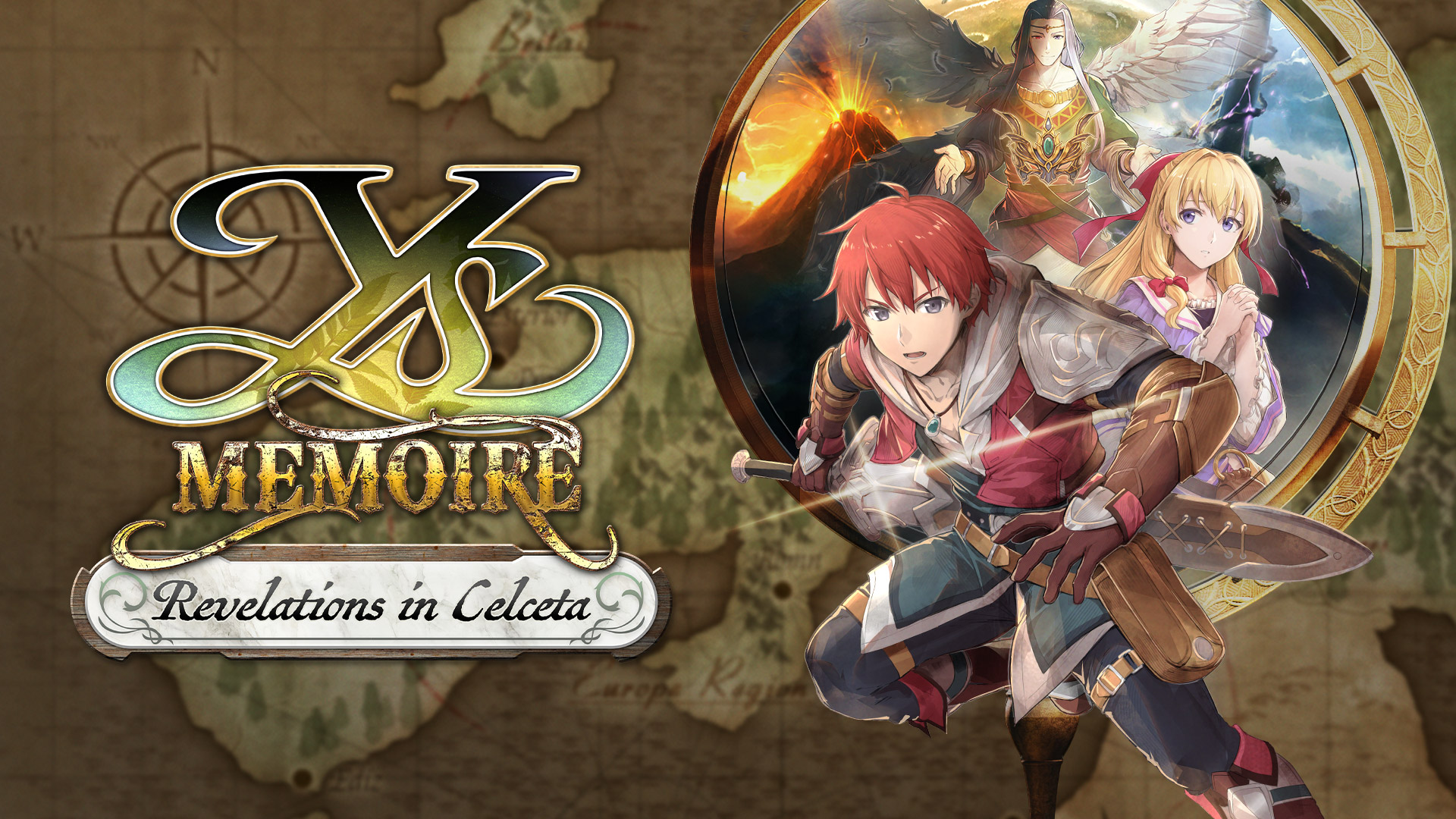
| Title | Ys Memoire: Revelations in Celceta |
| Developer | Nihon Falcom |
| Publisher | XSEED Games |
| Release Date | April 28, 2026 |
| Genre | Action RPG |
| Platform | Switch |
| Age Rating | Teen |
| Official Website | |
My relationship with Ys has, up until now, been entirely retro, despite only getting into the series a couple years ago. In our never-ending attempt to play all the games we missed out on growing up, my sister and I began tackling the series with the TurboGrafx versions of Ys I & II, and Ys III: Wanderers from Ys. We then played Ys IV: Mask of the Sun and Ys V: Kefin, the Lost Kingdom of Sand on the Super Nintendo. I knew there were modern remakes available to get into the series with, but I wanted to play their older versions to get a better sense of how the series evolved over time. So, when I had the opportunity to review Ys Memoire: Revelations in Celceta for the Nintendo Switch, a port of the PS Vita reimagining of Ys IV, it felt serendipitous. Now was my chance to compare where the game started and where it stands today, and I was excited.

Immediately I was struck by how much more the game had to offer. From the gorgeous opening sequence to the expanded intro, I could already tell this was a more lavish adventure than the one I played previously. The sprites from the original are now fully modeled characters and the environments are scaled up to match. Admittedly, the fixed camera took a bit to get used to, and I kept changing character tactics with the right analogue stick out of habit.
Rather than a simple adventure taken for the sake of it, Adol awakens in the bustling town of Casnan with no memories and no idea where he is or why he’s here. He meets up with an information dealer named Duren, who claims to know Adol, though both Adol and myself have no idea what he’s talking about, since I don’t remember him in the TurboGrafx version. It’s my second big realization that this is a vastly different reimagining than I expected going in.

Anyway, despite his reservations, Adol agrees to help out the people of Casnan when the local mine is overrun with monsters. He teams up with Duren (a first for me) and heads toward the mines, though not before encountering his first Memory. Throughout the game, Adol can interact with Memory Points to regain pieces of his past to slowly fill in the gaps not only about why he’s in Casnan, but who he is as a person, with flashbacks from his childhood informing the player about how Adol has always just been like this, seeking adventure at every turn. I like these little snippets; they’re fun.

After vanquishing the beasts in the mine, Adol and Duren are conscripted by Governor General Griselda of the Romun Army to scout the treacherous Celceta Forest. No one who enters ever seems to return — except Adol, but he can’t even remember exploring it in the first place. Seeing as it’s a chance to regain more memories and make some money thanks to Griselda’s offer, Adol and Duren set out to map the mysterious wilds of Celceta.

In broad strokes, Ys Memoire and Mask of the Sun are similar games. Both involve exploring the forests of Celceta, meeting the people who live there unbeknownst to the outside world, and solving the mystery of the ancient Kingdom of Celceta, but beyond that, these could not be more different. As noted, you now have party members recruited from the towns you visit, each of whom can perform specific actions out in the world to aid in the adventure. Duren can pick locks on treasure chests; Karna from Comodo can use her daggers to knock down hanging objects; Ozma from Selray breaks through underwater cracks with his spear; Calilica from Highland, whose hammer can activate special mechanisms; and Frieda from Danan, who summons ice to cover gaps in the terrain. You can have up to three members in your party at a time and swap between them at will to use their special abilities or fight, where their weapon type can be either strong or weak against certain enemies. For instance, as a monk type, Duren deals blunt damage, which is great against enemies with heavy shells, whereas Adol’s slash damage is best against soft fleshy things. Mixing and matching attack types provides party-wide perks of damage boosts or increased rare item drops, so party composition comes with passive benefits.

The world of Ys Memoire is also significantly bigger than before, with new locations tucked into the forest. It does away with the convoluted maps of Mask for a cohesive world design, which I appreciated. Having party members now means each character gets their own story beat and reason for joining Adol on his quest, and the enemies have slightly more fleshed out motivations. There are also a ton of sidequests in every town, expanding on lore or providing improved services to the party like new weapons or stronger accessories. All of this together creates more robust worldbuilding, but draws out the play time significantly. My sister and I beat Mask in roughly eight hours; Memoire took me more than 25 to 100% the map and complete all side quests on Normal difficulty. This puts the game at an overall comfortable length for a modern action RPG, but ended up feeling overlong and padded to me based on my previous experience with the original title.

One of the things that really struck me was how the updated combat still retains the frenetic, no-stopping-for-anyone feel of those older Ys games. Long gone is bump combat, but in its place is something with just as much forward momentum. As each character levels up, they gain access to new skills, which can be activated by pressing RB and the corresponding face button to which it was assigned. The more you use skills the more they level, dealing extra damage. You need to acccumulate Skill Points (SP) to use them, which you can gain from walloping on enemies, defeating them with a skill, or by equipping certain accessories. This leads to a satisfying feedback loop where you run around beating up everything in your path and weaving skills in as you gain enough SP. This in turn fills up your EXTRA gauge, allowing your character of choice to unleash an extremely powerful and flashy move. Everyone also moves fast. You can use the dodge button to jump and tumble to add even more speed, becoming a wrecking ball that mows down entire swaths of the map in one fell swoop. It is infinitely enjoyable, but for those occasions you need to just get in and out of there, the extra speed is welcome.

Not every design decision landed for me. While I appreciated the expanded story and character interactions, the early game in Ys Memoire is a constant barrage of cutscenes where the characters tell you how to do basic functions and where to go, which feels redundant when the game also provides a full screen guide to those same things. I don’t mind these moments for major scenes or getting to a new area, but for tutorials it was annoying. The fact you cannot skip cutscenes at all makes these more egregious, because you have to sit through them again on subsequent playthroughs. By the latter half of the game where game overs are an actual possibility in boss fights, it also means having to endure any preceding cutscene over and over again. I am, to put it bluntly, not a fan. Character special abilities are all mini cutscenes that cannot be skipped that play out every single time you use them, and only get longer as you recruit new characters. Duren’s lock picking animation is quick and simple, but Frieda’s ice move requires waiting for the camera to zoom out, the ice to form, and — if you have had to do it before — any other ice to melt before you finally take back control. It feels very PlayStation 2 era and not in a good way. There are other quality of life issues too, like the sometimes janky pathing for NPCs, the inability to jump over actual obstacles, and the cumbersome menu system that keep the game feeling less than modern, which I think is a fair expectation for a 2026 port of a 2012 reimagining of a 1993 video game, especially since Memoire comes with the option to use a rearranged soundtrack. The least they could have done was implemented a cutscene skip.

Speaking of the soundtrack though, the area Ys Memoire excels in without critique is the music. Every track feels purposeful and well-used, and the various location themes are all extremely memorable. From gentle piano motifs to shredding guitar solos, there is not a single miss in this game. You can use either original versions of arranged, and no matter which you choose you cannot go wrong. The series has always had a stellar track record when it comes to music, and Memoire does not disappoint. My personal favorites are Danan’s town theme, Beast Plain, the Forest of Dawn, and the Table Mountains, as well as the song that plays during Adol’s memories and during pivotal scenes. It’s touching and a bit melancholic, and that’s exactly my jam.

I played through the game on the Switch 2 and it ran beautifully in both docked and handheld mode. I did not notice any graphical or performance issues in my 25 hours of play. I did find it somewhat uncomfortable to play using the Switch 2 Joycons due to the small face buttons and bumpers, though that will be very YMMV for every player. The Switch 2 being a larger, wider system also made it more cumbersome in handheld mode, but was easily mitigated by using the inbuilt kickstand and a Pro Controller. Being able to play anywhere paired nicely with the game’s save whenever you want design.
Overall, I enjoyed Ys Memoire: Revelations in Celceta. It expanded on the story I knew from the TurboGrafx era while still retaining the fast pace of combat and sense of adventure. The new and returning characters got a lot of love and characterization, which I really appreciated, especially with Duren, who is now one of my faves. Unfortunately, those story and character additions also contributed to a longer play time that felt overly padded at times. The game suffers from a lack of quality of life features such as a cutscene skip, and its hand-holdy style of spoonfeeding the player information was frustrating, especially in the beginning when I really wanted to jump into the action. I wish there had been more voice acting rather than relegating it to only a couple scenes, but the acting was fine all around. I played mostly with Japanese voice over but the English voices were good. The music is excellent and without reproach. Adventuring with Adol is always a good time, and I am definitely glad I got to go on this one with him again.
| Review Score | |
|---|---|
| Overall |    |
Review code provided by the publisher. Game played on Nintendo Switch 2 via backwards compatibility.


